Slow manual scanning
Scanning each roll’s QR code one at a time is slow and error-prone at receiving and issue.
 Discuss a requirement
 Cutting bundleExpected 24 panelsVerified 23Panel 17 missing
Fabric roll & cutting track and trace
Tag each fabric roll at receiving, record its rack and block location in one scan, and verify every cutting bundle in bulk so a missing panel is found before it reaches sewing.
Manual roll tracking
When every roll is scanned one at a time, the warehouse view is always behind, and shade or panel problems surface at the cutting table.
Scanning each roll’s QR code one at a time is slow and error-prone at receiving and issue.
Without rack or block level visibility, teams search for rolls instead of issuing them.
Shade and lot mix-ups and missing panels appear late, when they cost rework and delay.
Scope of tracking
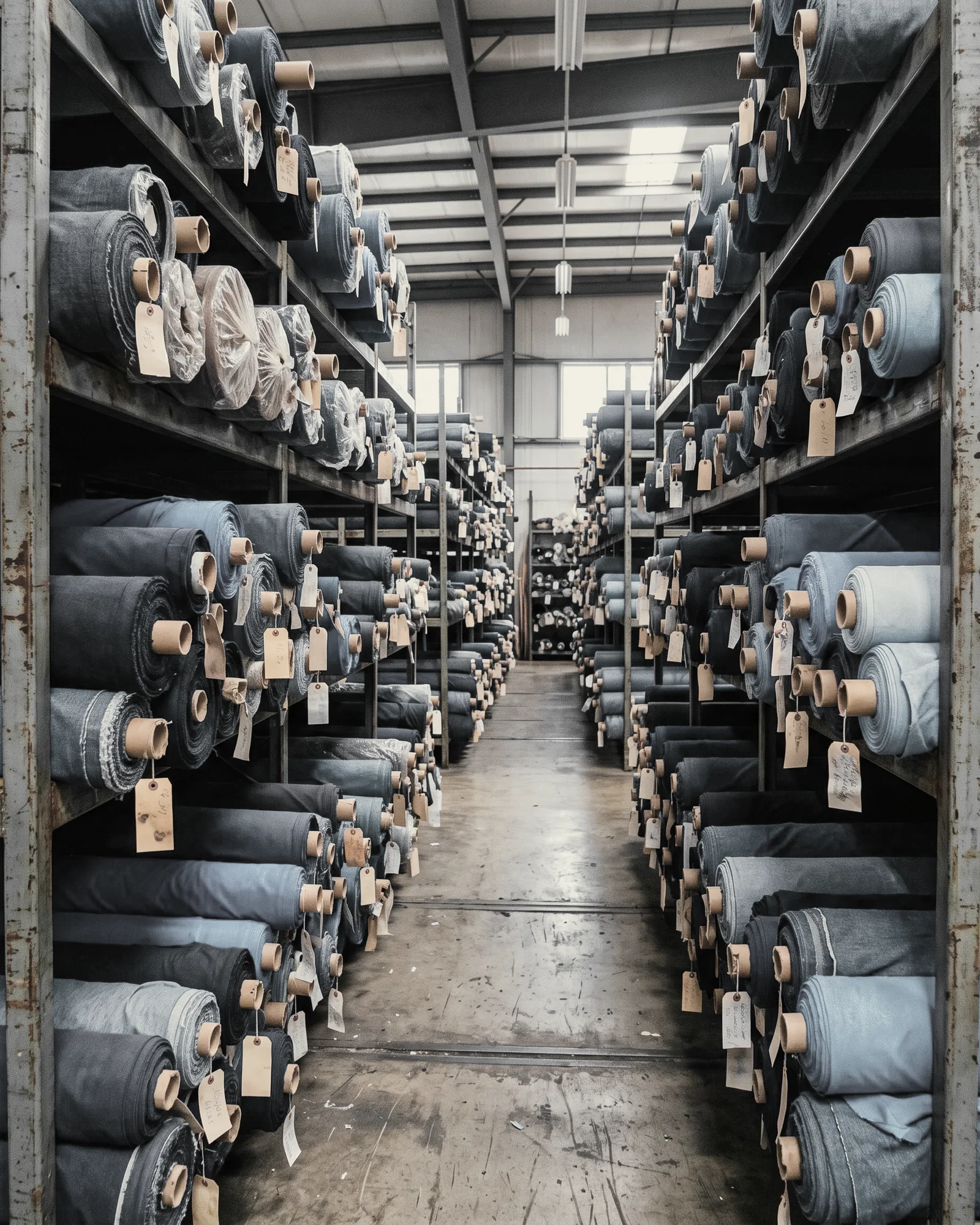
Each roll carries an RFID label with its printed details and QR code, linked to its shade, blanket and lot data.
Rolls are tagged at receiving and registered with their inspection results.
Each roll is linked to its shade, blanket and lot so similar fabrics never get confused.
Rolls are recorded against their rack or block as they are put away.
The correct rolls are issued and the movement is recorded automatically.
Cut bundles move to sewing with full roll-to-panel traceability.
 Rack / Block / Roll / Location
Rack and block location
The result is a live warehouse view of every roll, by location.
Cutting stage verification
Each bundle is linked to its expected list of panels at cutting. Corridor portals confirm the count as bundles move and identify the exact panel that is missing.
Every bundle carries the list of panels it should contain, created at cutting.
Bundles are read in bulk as they enter and leave cutting, with no unit-by-unit scanning.
The system confirms the count instantly and names the panel that is missing.
Any single bundle can be checked with a handheld reader at any time.
Software, reports and integration
Software modules, reports and alerts run on a central server, on-premise or in the cloud, with a web application for controls and dashboards.
Roll registration and encoding, shade, blanket and lot linking, rack and block locations, cutting issue and bundles, panel count and alerts.
Live stock by location, roll lifecycle, shade and lot-wise reports, and issue versus consumption.
Immediate alerts for mismatches, wrong issues and missing panels.
API integration with your ERP or WMS for master data, transactions and user roles, regardless of the ERP you use.
Fabric store
The planner asks for shade A, lot 11. Without tags it takes 40 minutes to find.
Ten searches a day at 2 minutes instead of 40 saves over 6 hours of store time daily.
Apparel
Each stage reads the same identity instead of creating its own count.
Every roll located by rack, with shade and lot.
The right shade reaches the cutting table.
Bundles counted out in bulk.
50 bundles out, 50 bundles in.
Output by operation, during the shift.
The bottleneck seen within the hour.
Every piece counted in and out of each stage.
The 12 missing pieces traced to drying.
Washable tag swapped for the buyer's hangtag.
Tags reused, lot after lot.
Every carton checked against its order.
The wrong size mix stopped before sealing.
Every carton matched to the right container.
Proof for the buyer of what left.
Delivery read at the door.
Shortages found the same day.
Scenarios
Two situations from garment factories, with the arithmetic. The numbers are assumptions; replace them with your own.
Scenario 1
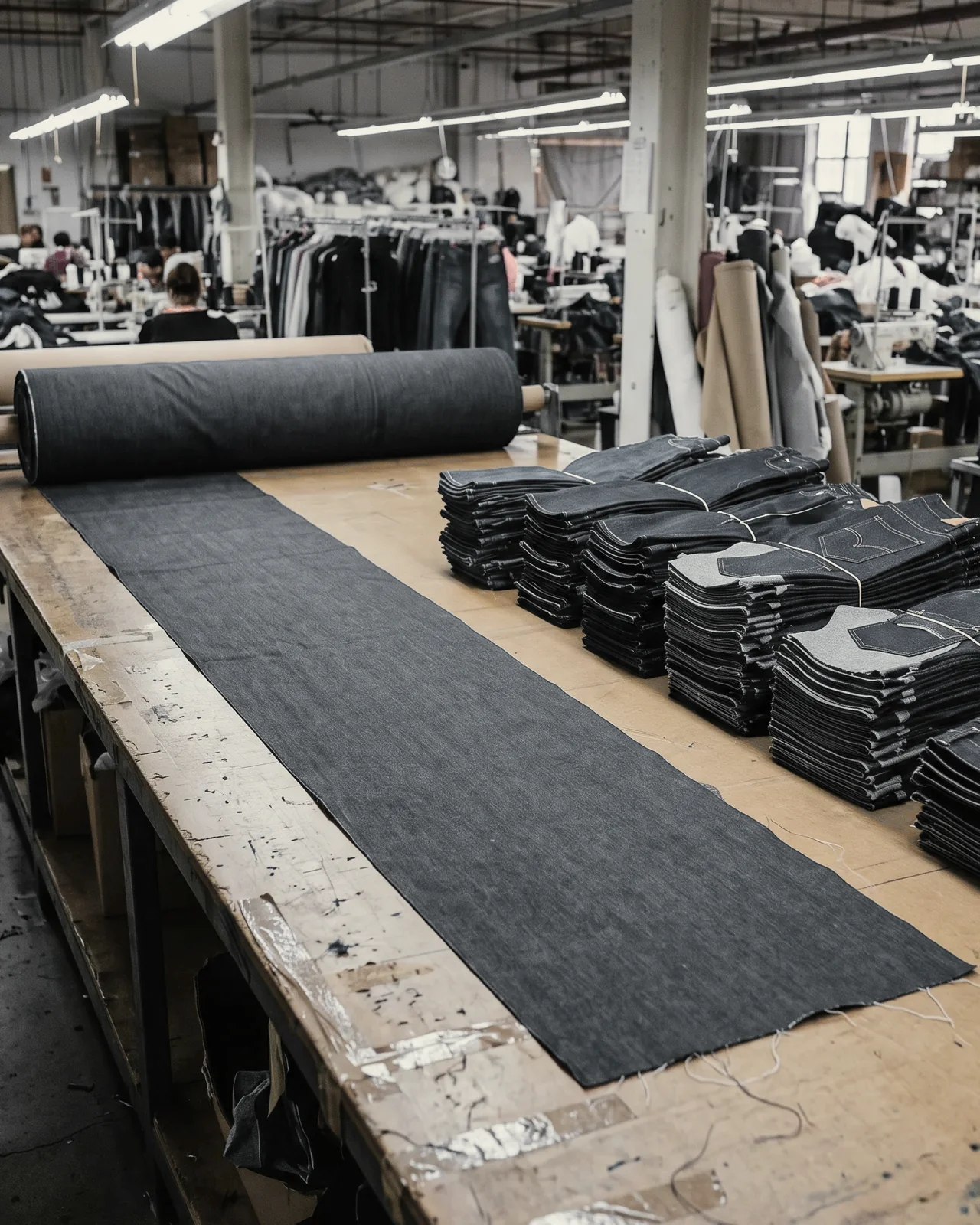
A denim factory holds 2,000 rolls across 40 racks. The cutting room requests six rolls of a given shade and lot for an order.
A storekeeper finds the rolls from memory and a paper register. One roll is from a different lot. The difference only shows after sewing, when panels from two shades meet in one garment.
Rolls issued to cutting pass a reading point at the store door and are checked against the requisition. The wrong lot is stopped before it leaves the store.
One wrong roll can mean 80 garments cut from the wrong shade: a re-cut, a delay, and sometimes a missed shipment date.
Scenario 2
Management wants a monthly count of the fabric store to plan purchasing.
Each roll is scanned by hand. At about 10 seconds a roll, 2,000 rolls take about 5.5 hours of scanning, before any corrections. Counts are skipped when the factory is busy.
Each rack carries its own location tag. A rack and all its rolls are read in one pass, so the store can be counted rack by rack in a fraction of the time, and the location of every roll is always known.
From about 5.5 hours of scanning to well under an hour for the same store, which makes a weekly count realistic.
In practice
Each roll gets a printed label with a QR code and a tag at receiving. The tag is linked to the roll's shade, blanket, lot and length, so the information travels with the roll instead of living in a register.
Issues are checked against the cutting requisition at the store door. Part-rolls returning from cutting are read back in with their remaining metres, so the store record and the real balance stay the same.
After cutting, bundles carry a card or tag. Bundles in and out of cutting are verified in bulk, so the count that leaves cutting is the count that reaches the sewing line.
Questions
Each roll is tagged at receiving with an RFID label carrying its printed details and QR code, linked to its shade, blanket and lot, and recorded against its rack or block as it is put away.
Yes. The rack and its rolls are scanned in one pass, giving a live warehouse view of every roll by location.
Each bundle is linked to its expected list of panels at cutting. Corridor portals read bundles in bulk as they enter and leave cutting, confirm the count and name the panel that is missing. Any bundle can also be checked with a handheld reader.
Yes. API integration with your ERP or WMS covers master data, transactions and user roles, regardless of the ERP you use. The software runs on a central server, on-premise or in the cloud.
A focused first step
Share roll volumes, storage layout, your current scanning method and the ERP you use, and we will map the tracking points with you.