Counting by hand
Every stage and every transfer between units depends on manual counts.
 Discuss a requirement
 Laundry out · Lot 2214In 600Out 5982 garments short
Garment processing & washing tracking
Reusable, washable RFID tags go on at the end of sewing and stay through washing, drying, pressing and finishing, so corridor portals count each lot automatically and flag any shortage.
After the sewing line
Washing, drying, pressing and finishing move garments in bulk between stages and units. Without a reliable count at each handover, shortages appear at packing.
Every stage and every transfer between units depends on manual counts.
Missing garments are discovered at packing, when the lot has already passed through several stages.
Supervisors cannot see where each order, shade or SKU is in post-sewing processing.
Tag allocation at the end of sewing
Washable UHF RFID laundry tags are reusable, survive washing, drying and processing, and are recovered at finishing.
A mobile reader scans the QR code on the polybag.
A washable UHF laundry tag is placed in the polybag and linked to it.
The polybag is attached to the garment for its journey through processing.
Corridor portals read trolleys in bulk and individual garments by shade, SKU and order.
At trims and labelling the buyer’s hangtag replaces the washable tag.
Processing stages
Each stage confirms the lot coming in and going out, so a shortage is caught at the stage where it happened.
Chemical wash, stone wash, bleaching, dyeing and other washes, counted in and out of the laundry.
Lots verified after hydro extraction and drying.
Garments confirmed as they move through pressing.
Counts recorded before and after trimming.
Passed and held garments recorded against the lot.
Buyer hangtags attached and linked to each garment.
Final counts confirmed before packing and audit.
Movement between factory units recorded without manual counting.
 Scan / Switch / Collect / Reuse
Tag switching and reuse
Reusable tags lower the cost per garment and support sustainability goals.
Why it pays back
Real-time counts replace manual reconciliation, and the same tags are used again and again.
Real-time inventory at every processing stage, live location and status of SKUs, and tracked transfers between units.
Reusable tags reduce operating cost, bulk reading reduces counting labour and time, and fewer misplacements reduce wastage.
Stronger quality control, fewer misplaced garments, automated data capture with ERP integration, and support for sustainability and ESG commitments.
Washing and finishing
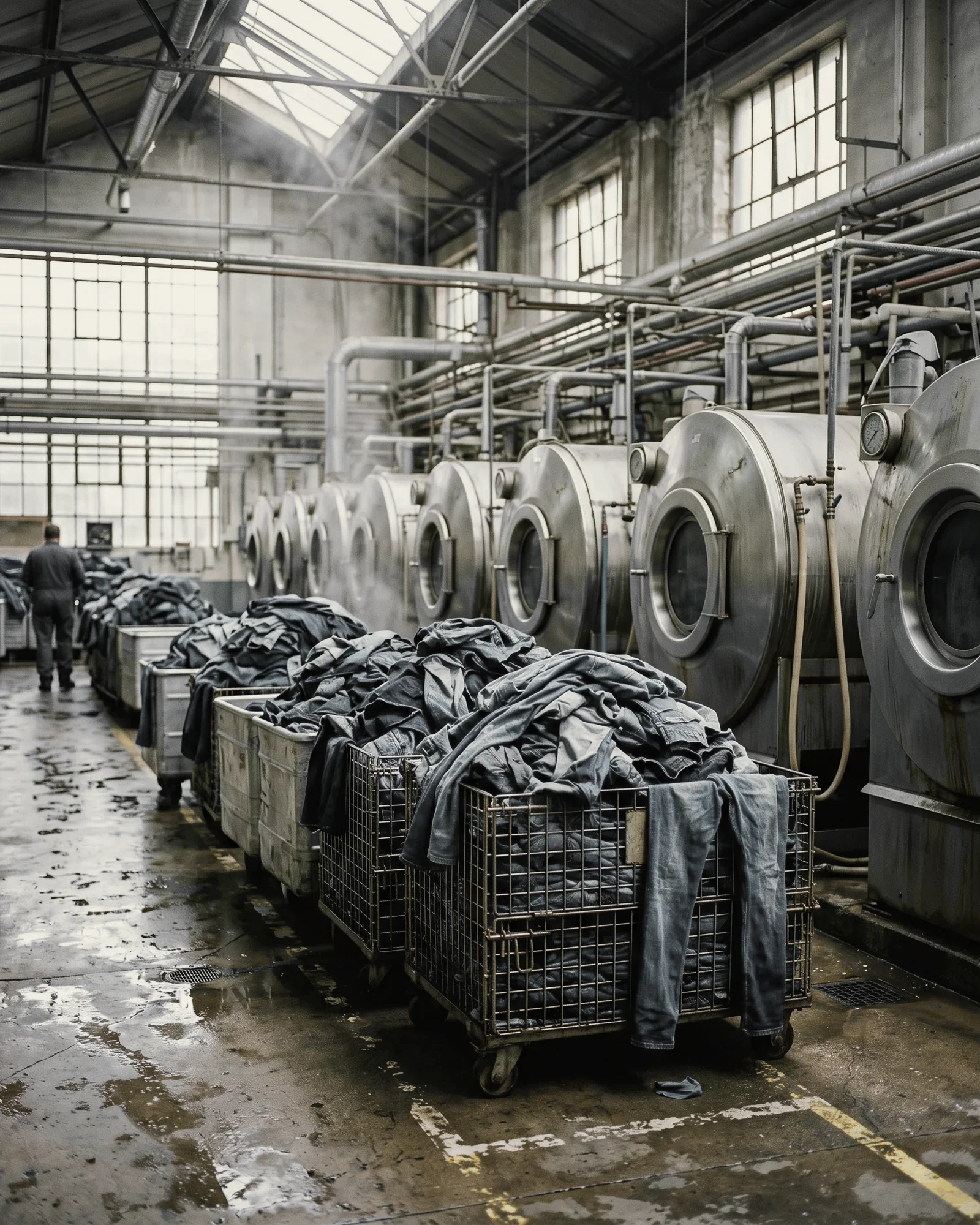
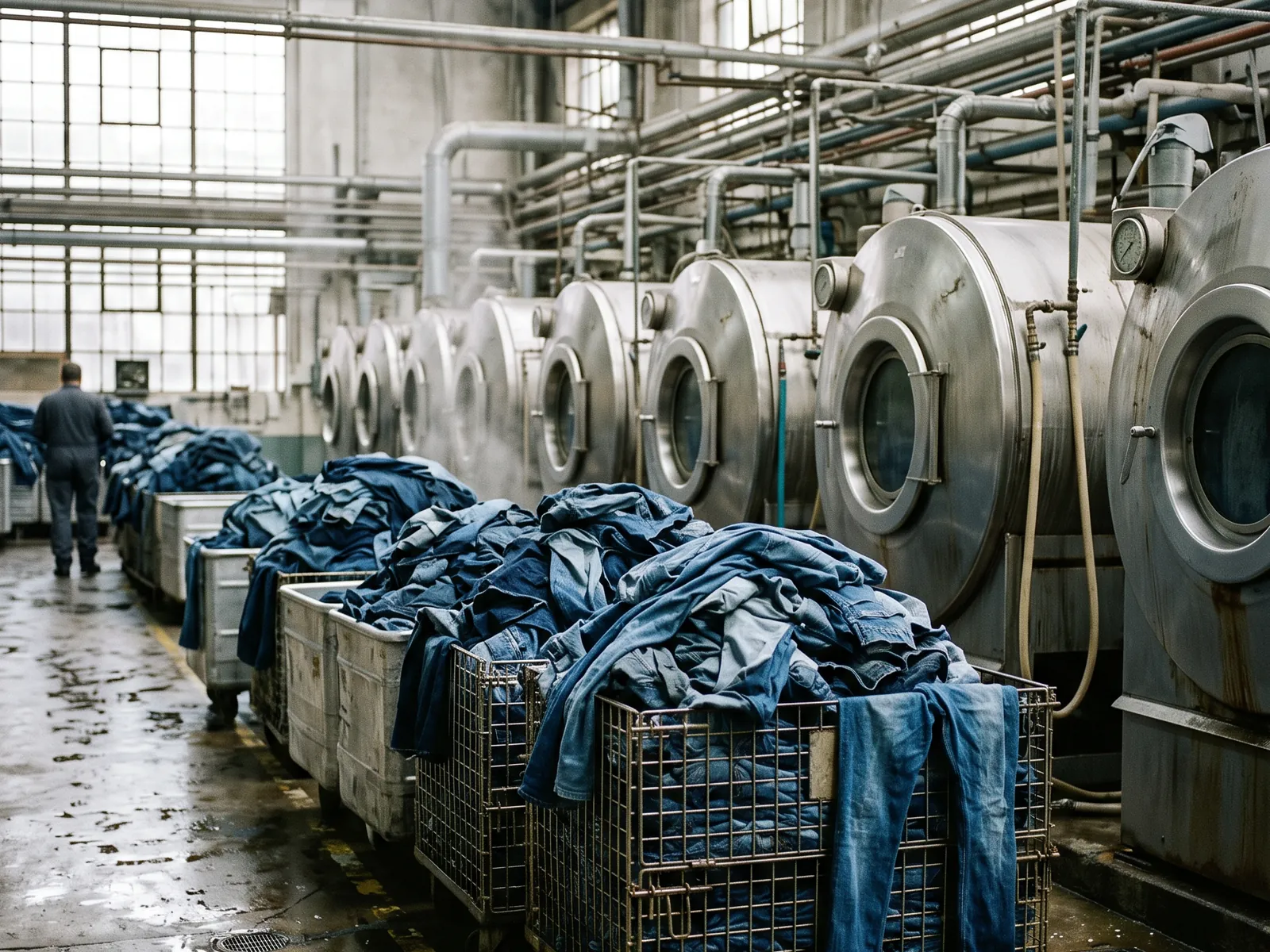
A denim washing plant, end of shift. Counted at every stage, the shortage has an address.
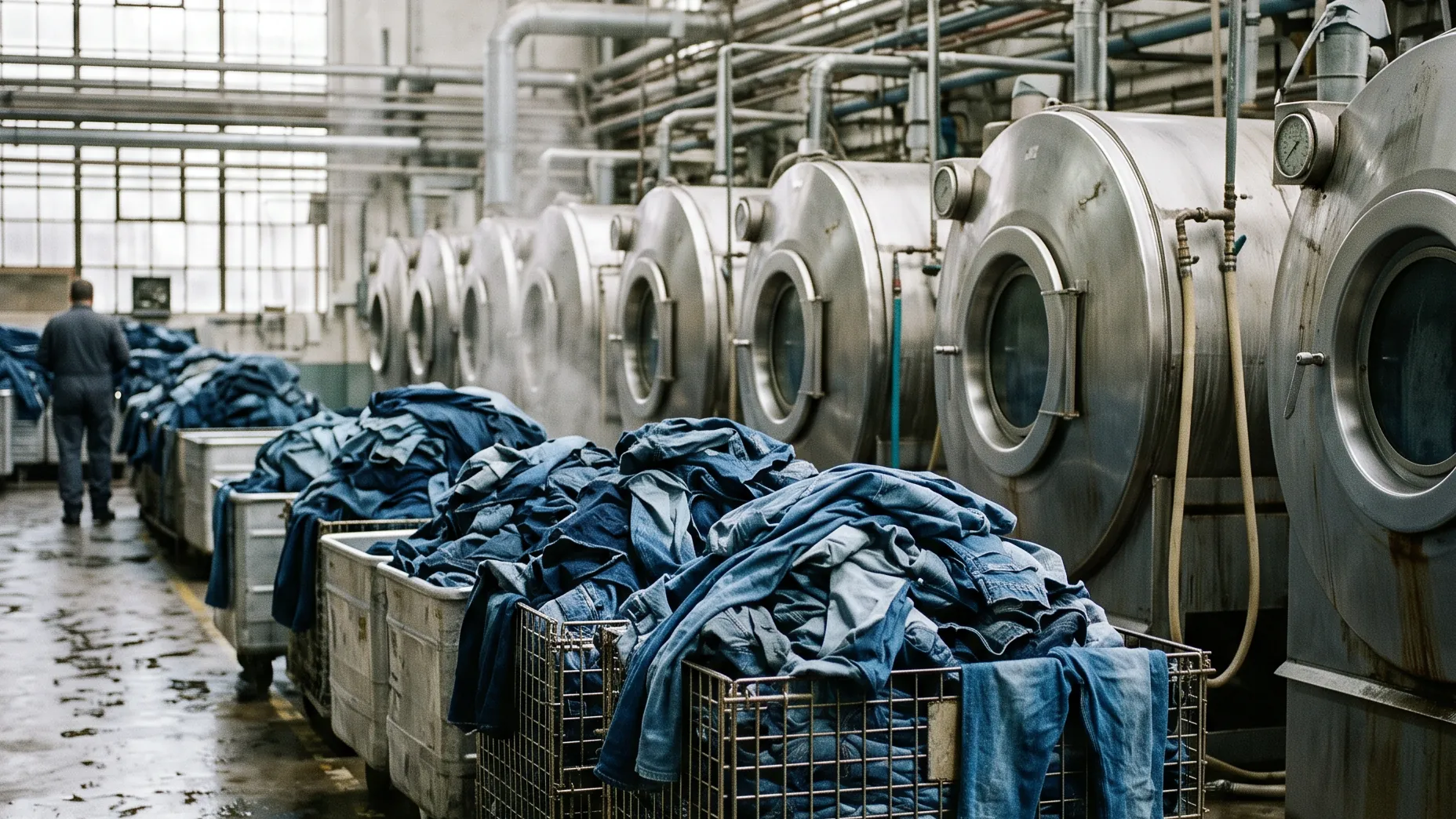
The search starts at drying, the same day, while the pieces may still be found.
Washing and finishing
Stage-by-stage counts show where the pieces were lost, the same day.
Scenarios
Two situations from washing and finishing, with the arithmetic. The numbers are assumptions; replace them with your own.
Scenario 1
A denim order of 1,200 pieces goes through washing, hydro extraction, drying, pressing, trimming, checking and finishing.
Each stage counts by hand. The order reaches packing 12 pieces short. Nobody can say where they were lost, so the factory re-cuts and re-sews to complete the shipment.
A washable tag on each garment is read in and out of every stage. The record shows the 12 pieces left drying but never reached pressing, and the supervisor finds them the same day.
12 pieces re-cut and re-sewn, plus the delay to the shipment, cost far more than the pieces themselves. Traced the same day, they cost a search.
Scenario 2
A factory sends lots to an outside washing unit and receives them back two days later.
Counts at dispatch and return are done by hand on both sides. When pieces are missing, each side has its own number and the argument has no end.
Each lot is read out of the factory and back in, piece by piece, in seconds. What went out and what came back is a shared record.
With stage-by-stage counts, a shortage becomes a specific number at a specific stage, and a specific conversation with the party responsible.
In practice
A tag designed for washing is attached to each garment at the end of sewing, inside the polybag or on a care label. It survives washing, drying and pressing, so the garment keeps its identity through the hardest part of the process.
Reading points at the entry and exit of each stage count every lot automatically, without opening bags or counting by hand. Progress of each order through processing is visible at any moment.
At trims and labelling, the washable tag is exchanged for the buyer's own hangtag and returned to the start of the line. Tags are reused lot after lot, which keeps the cost per garment low.
Questions
A reusable, washable UHF RFID tag is linked to each garment at the end of sewing. Corridor portals count each lot in and out of every stage, so a shortage is caught at the stage where it happened.
Yes. The laundry tags survive washing, drying and processing. At trims and labelling the buyer's hangtag replaces the washable tag, which is recovered and reused.
Washing (including chemical wash, stone wash, bleaching and dyeing), hydro extraction and drying, pressing, trimming, quality, hangtag attachment, finishing and transfers between factory units.
With a process study and corridor portals at key points in one unit. Read accuracy, time saved and shortages caught are measured before rolling out across factories and wash units.
Start with one unit
Start with a process study and reading points at the key stages of one unit. Measure read accuracy, time saved and shortages caught, then extend across factories and washing facilities.