Manual inspection at the end of the line misses what tired eyes miss. A camera at the right point checks every item, every time, and stops the line while it still matters.
13 Nov 2026 · 2 min read · Zorsan
The most expensive place to find a defect is in the customer's hands.
By then the product has been made, packed, shipped and sold. The cost is no longer the defective item. It is the return, the replacement, the complaint and, for some products, a recall.
Why manual inspection misses
Inspection by eye works well for the first hour of a shift. After that, attention drops. Inspectors check a sample, because checking everything at line speed is impossible. And some defects are hard to see at all: a label slightly misaligned, a print code with a missing digit, a seal that looks closed but is not.
So defects pass, not because people are careless, but because the task is beyond what people can do reliably for eight hours.
Quality on the line
Every unit past one camera.
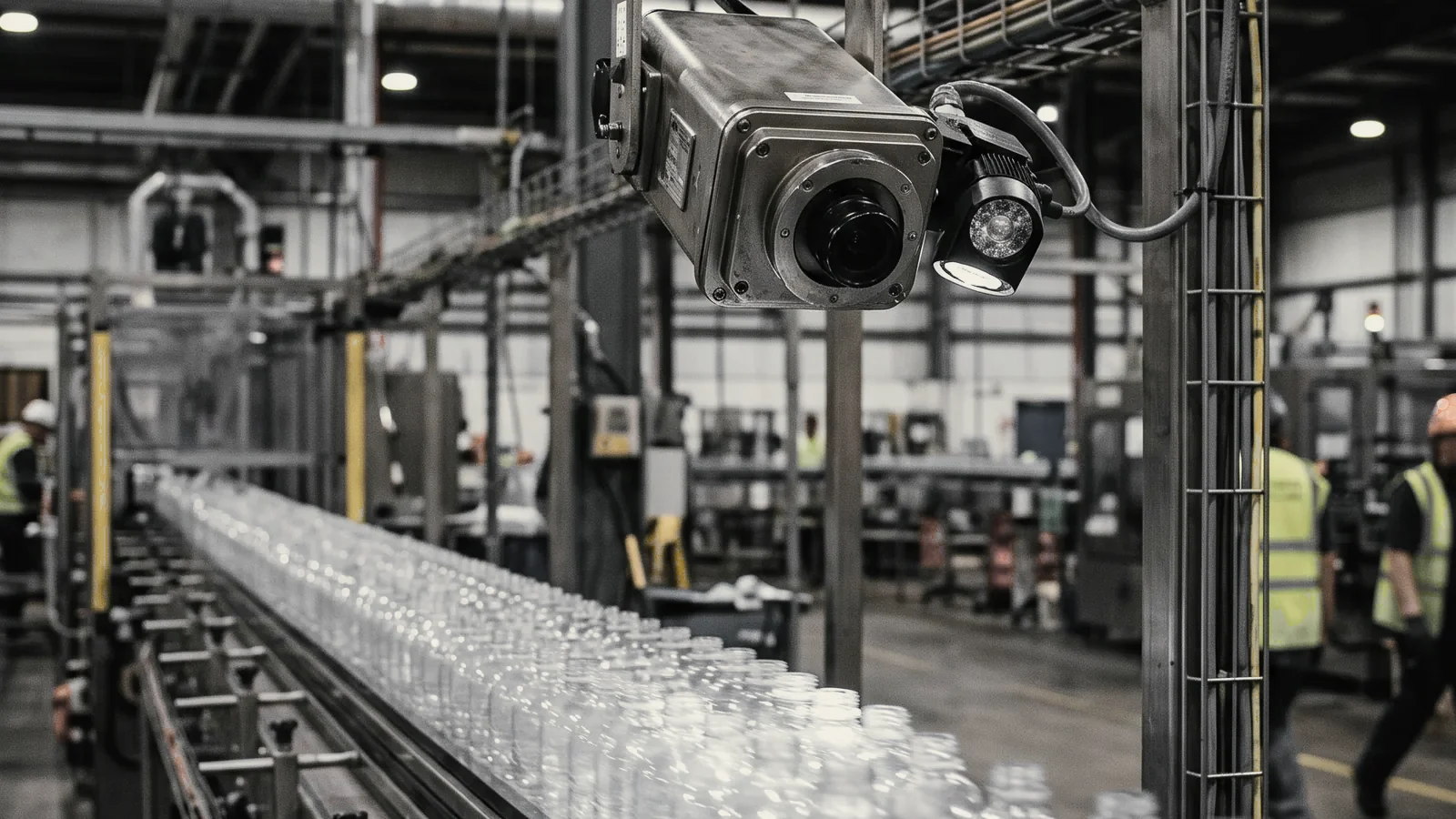
Units move at line speed. A camera after the labeller checks every one; the wrong label is rejected before a whole batch carries it.
CheckpointHeldWrong batch code · rejected
01Fill60 units a minute
02Capsealed
03Labelcamera checks every unit
04Packinto cases
05Dispatchwith a record per batch
0 passed0 held at Label
What a camera does differently
Machine vision places a camera and lighting at a fixed point on the line and checks every item against a defined standard:
Labels and codes: is the right label on, straight, readable, with the right batch and date?
Presence and count: is every component in the pack?
Seals and closures: is it sealed, capped and intact?
It does not get tired. It checks every item, not a sample. And it can act: reject the item, stop the line, or alert the supervisor the moment a pattern appears.
Where to place the check
The best place is usually just after the step that causes the defect, not at the end of the line. A label check right after the labeller catches a fault in the first few items, before a whole batch is labelled wrong.
What changes
Defects caught on the line, not by the customer.
A record of every inspection, by batch, for audits and complaints.
Patterns visible early: a defect that rises over the shift points to a machine that needs attention.
The question
Where are most of your defects found today: on the line, at the end of the line, or by the customer?
Newsletter
Lessons from the floor, once a month.
One short read on where operations lose control and what it costs. No sales emails.